the chemical action of yeast on sugars
At the same time hundreds of secondary metabolites that influence the aroma and taste of beer are produced. This is why the dough volume increases.
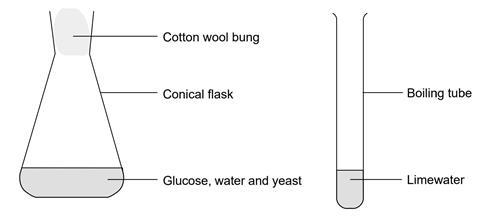 |
| Fermentation Of Glucose Using Yeast Experiment Rsc Education |
The type of alcohol in alcoholic beverages.
. Naturally sy a state at which the body is poisoned with alcohol or substan a drug that slows the central nervous system. With over three percent sugar however the fermentation rate no longer increases. Forms the framework or structure of the dough. Variation in these metabolites across different yeast strains is what allows yeast to so uniquely influence beer flavor.
The chemical reaction between yeast and sugar produces ethanol and carbon dioxide. Ethanol the type of alcohol in alcoholic beverages. The state in which the body is poisoned by alcohol or another. Up to 24 cash back In bread making or special yeasted cakes the yeast organisms expel carbon dioxide as they feed off of sugars.
Still other enzyme reactions break apart the sugar molecule composed of carbon hydrogen and oxygen atoms into ethyl alcohol and carbon dioxide. Alcohol is created through a process called the chemical action of yeast on sugars which turn them into alcohol. Provides moisture for baked products. During fermentation yeast cells convert cereal-derived sugars into ethanol and CO 2.
Yeast feed on the sugars in the juice and produce alcohol. Chief ingredient in bread. The yeast processes the added sugar first saving the time it would take to break down starch into sugar. Certain enzymes in yeast act on starch to break down the long chainlike molecules into smaller units of sugar.
The chemical action of yeast on sugars 2 types. Yeast consumes sugars and turns them into carbon dioxide alcohol and other compounds. This reaction which takes place in. A drug that slows the central nervous system.
The balanced chemical equation for this reaction is glucosesugar C6H12O6 in the presence of the yeast enzyme zymase reacts to produce 2C2H5OH ethanol 2CO2 carbon dioxide. Intoxication the state in which the body is poisoned by alcohol or another substance and the persons physical and mental control is significantly reduced. Improves flavour and controls yeast growth. Glencoe Health Chapter 21 - Alcohol.
It is used in the brewing and baking industries. Depressant A drug that slows the central nervous system 4. Cerevisiae high glucose concentrations induce an increase of34 times the pyruvate decarboxylase activity and a decrease of acetaldehyde dehydrogenase activity favoring the alcoholic fer- mentation. Chemical action of yeast on sugars.
The chemical action of yeast on sugars and. Often the method calls you to mix the powdered yeast with sugar an. A drug that slows the central nervous system. Science Lesson PlanThese videos have accompanying resources and lesson plans at httptnstrandolphcollegeeducurriculumresourceslessonplans.
The carbon dioxide gas bubbles is what causes yeast to rise. This is the ethanol fermentation process used to make beer wine and bread. Ethanol The type of alcohol in alcoholic beverages 2. This is because the sugar begins to dehydrate the yeast cells.
The carbon dioxide expands and moves as the bread dough warms and bakes in the oven. FermentationIs the chemical action of yeast on sugars 3. Lactase causes lactose to split into glucose and galactose. The chemical action of yeast on sugars.
As the dough rises and proofs carbon dioxide is formed. Although most breweries use pure yeast cultures. C6H12O6 2CH3CH2OH 2CO2 Energy which is stored in ATP Sugar Alcohol Carbon dioxide gas Energy Glucose Ethyl alcohol From the above it seems nice an simple chemistry one mole of glucose is converted into two moles. On the other hand at low glucose concentrations pyruvate is mainly converted to acetylCoA by the PDH complex.
Manipulating dough to develop the gluten and give the dough elasticity. However when lactase is present significant fermentation occurs. Yeast and Sugar Chemical Reaction Yeast and Sugar Chemical Reaction. The results show that while sucrose readily undergoes mass loss and thus fermentation lactose does not.
When yeast ferments the sugars anaerobically however CO2 production will cause a change in the weight of the sugaryeast-solution. The enzymes in yeast break down sugar glucose into alcohol ethanol and carbon dioxide gas. The reactions within the yeast cell which make this happen are very complex but the overall process is as follows. Fermentation the chemical action of yeast on sugars.
Depressant drugs that tend to slow down the central nervous system. Yeast can metabolize sugar in two ways aerobically with the aid of oxygen or anaerobically without oxygen. The state in which the body is poisoned by alcohol or another substance and the persons physical and mental control is significanty reduced. 1 Above six percent sugar actually decreases the rate.
Then other yeast enzymes convert one kind of sugar molecule to another. The bread rises and sets. Clearly the enzymes in the yeast are unable to cause the lactose to ferment. Many baking recipes for example making a pizza base or bread use yeast and sugar.
Intoxication Is the state in which the body is poisoned by alcohol or another substance and the persons physical and mental control is significantly reduced 5. Post Aug 05 2012 1 2012-08-05T0746. In this experiment yeast ferment sugars anaerobically.
 |
| Fermentation Of Glucose Using Yeast Experiment Rsc Education |
| 2 |
 |
| Growing Yeast Sugar Fermentation Science Project Education Com |
 |
| Yeast And Sugar Food Chem Blog |
 |
| Week 3 Sugar Yeast And Life View As Single Page |

Posting Komentar untuk "the chemical action of yeast on sugars"